
Glutathione in Skincare: The Scientific Evidence, Realistic Expectations and Safety Limits
What is glutathione, what does it do in the skin, and what do studies say about its oral, topical and injectable forms? A simple, honest review for consumers and professionals.
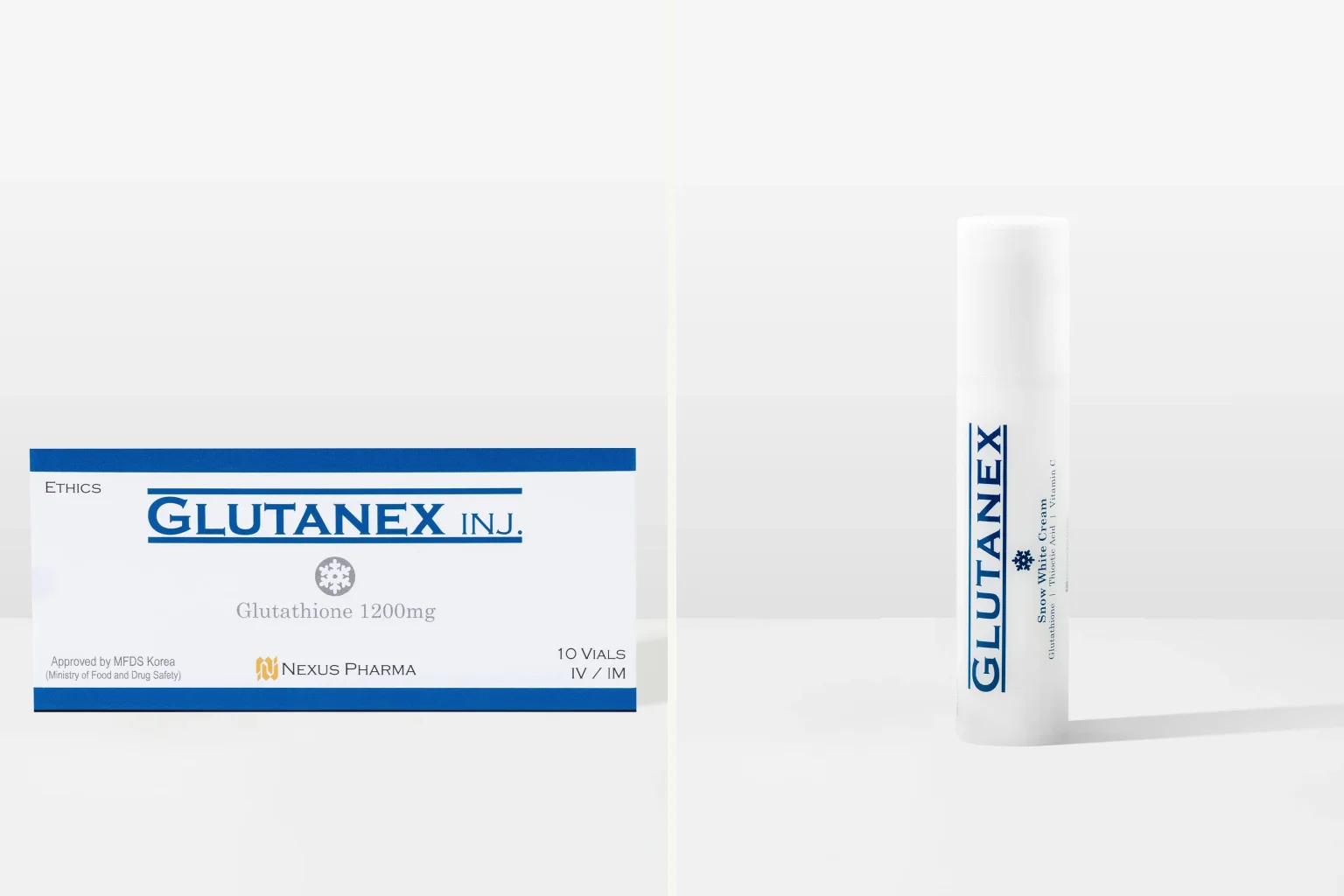
Glutathione is one of the most frequently mentioned names in the beauty market, and at the same time one of the most misunderstood. Some think of it as a "whitening shot", while others see it as a harmless everyday antioxidant. The reality lies somewhere between the two and depends on the form in which it is used. Drawing on scientific reviews published in PubMed, this article separates how glutathione works, the evidence for each form and the safety limits, so that both home users and professionals can make a better-informed decision.
If you only have a minute
- Glutathione is an antioxidant tripeptide that the body makes itself and that plays a role in the cell's oxidative balance.
- The lightening effect attributed to glutathione is explained by inhibition of tyrosinase and a shift in the melanin production pathway.
- For oral and topical forms there are a few small trials with preliminary results; duration of use, how long the effect lasts and the maintenance protocol are still unclear.
- For the injectable form used for cosmetic purposes, evidence of efficacy is limited, and serious risks such as liver injury and severe allergic reactions have been reported.
- Every product carrying the glutathione name should be judged by its own form, amount and registered use, not by the name of the ingredient.
1. What is glutathione and what does it do in the body?
Glutathione is a small molecule made of three amino acids (cysteine, glycine and glutamate) that is produced in almost every cell of the body. Its main role is to maintain the balance between oxidation and reduction inside the cell, that is, to neutralise free radicals and protect proteins against oxidative damage. For this reason, the scientific literature refers to it as one of the body's main antioxidants.
Glutathione exists in two states: the reduced form (GSH), which is active, and the oxidised form (GSSG). Either form may appear in skincare products, and topical studies have usually been carried out on one of the two. This small detail matters when comparing products: the result of a study on GSSG cannot be directly generalised to a product containing GSH.
2. Why is glutathione linked to "lighter skin"?
According to the review by Sonthalia et al. (2016), glutathione's anti-melanogenic effect is explained by two pathways: direct and indirect inhibition of tyrosinase, the enzyme that plays a key role in melanin production, and a shift in production from eumelanin (the darker pigment) to pheomelanin (the lighter pigment). This mechanism can be observed in the laboratory, but the gap between a mechanism and a reliable clinical result is exactly where the market's exaggerations take shape.
The same review stresses that the hype surrounding its lightening properties may be more of a marketing tool than a proven result. Put simply: having a plausible mechanism is not sufficient reason to promise a result.
3. Oral glutathione: what does the evidence say?
A randomised, double-blind trial in Bangkok studied 60 healthy people for 4 weeks taking 500 mg of oral glutathione daily or a placebo. The melanin index fell in all areas in the glutathione group, but the reduction was statistically significant in only two of the six areas. The authors themselves concluded that the effect was seen in "a small number of subjects" and that long-term safety has not been established.
A 2025 review in Cureus also describes the oral form as relatively safe, with mild and transient side effects, but emphasises the need for larger studies with longer follow-up. A fair summary is this: there are early signals, but the effect size is small, the study periods are short and the question of how long the effect lasts remains unanswered.
4. Topical glutathione: creams and serums
In the study by Watanabe et al. (2014), 30 healthy women aged 30 to 50 applied a 2% oxidised glutathione lotion to one side of the face and a placebo to the other for 10 weeks. The melanin index was significantly lower on the glutathione side, and in the second half of the study stratum corneum hydration, skin suppleness and inhibition of wrinkle formation also improved. No notable side effects were reported.
This study has an acceptable design, but it is small, was supported by the manufacturer of the raw material and examined only one form and one concentration. For Glutanex home-use products such as Cica Cream, Night Serum or Snow White Cream, the glutathione concentration is not disclosed in the official source, and for this reason LILWANA keeps expectations focused on hydration, calm and a cosmetic effect on appearance, not a lasting change in skin colour.
5. Injectable glutathione: why it is a medical decision
The Sonthalia review states explicitly that, despite the popularity of intravenous glutathione, there is no evidence proving its efficacy in lightening the skin, and that reported adverse effects led the Philippine Food and Drug Administration to issue a public warning against off-label use. The 2025 review likewise lists serious risks such as liver injury and anaphylactic reactions for the intravenous form and concludes that these risks outweigh its limited efficacy.
If you have read this far, you are probably looking for clearer, more even and fresher-looking skin; that is an entirely natural wish, and we do not judge it. The point of this section is not "don't want it" but "which route to take". What we have seen again and again in conversations with customers is that when the first priority is the health and care of the skin (a calm skin barrier, enough hydration and daily sun protection), the very look you are after also comes more naturally and lasts longer. Beauty is the result of care, not a shortcut separate from it.
That is why, for the goal of brighter, clearer skin, the route we can recommend with confidence is topical, everyday care: Glutanex Cica Cream to calm tired, sensitive skin, the Night Serum for night-time care and Snow White Cream for a bright, even look during the day. You can introduce these products slowly, one at a time, without any medical decision, keep them alongside sunscreen and see the change over several weeks. If you are not sure which one suits your skin better, talk to a LILWANA adviser before you buy, so that your money and time go into exactly what your skin really needs.
The injectable form, however, stands somewhere else. Products such as Glutanex Injection, Gluta-1 or the Drip package are a medical decision, not a beauty purchase; their selection, amount and administration only make sense with a physician, based on the registered use in the leaflet for that specific batch, the person's medical history, allergies and interactions, and administration takes place only in a qualified centre. LILWANA does not place these items in the general beauty shopping route, publishes no injection training or usage instructions, and reviews orders for them only for physicians and qualified centres.
- No injectable glutathione product has been approved for skin lightening in the sources reviewed.
- A higher amount does not mean a better or faster result, and it increases the risk.
- Self-injection, injection in a non-medical setting and preparing the vials without the leaflet for that specific batch and a physician's opinion fall outside any safe framework.
- Claims of "no side effects" or "guaranteed results" are not consistent with the available evidence.
6. How should you judge a glutathione product?
Instead of asking "Is glutathione good?", ask "What does this product, in this form, at this amount and for this use, mean for me?". A few simple questions make the decision clear.
- What is the form of use? Topical, oral or professional; each has different evidence and a different risk.
- Is the amount or concentration of glutathione disclosed? If not, do not take claims about results seriously.
- What role do the accompanying ingredients play? In Cica Cream, centella has a calming role; in Snow White, the tone-up effect comes from the cosmetic formula, not from glutathione alone.
- Where does the claim come from? The manufacturer's official page, the leaflet for that specific batch, or just a promotional post?
- Who makes the decision? For the professional form, only a physician; for the home-use form, you, with a patch test and a gradual start.
Frequently asked questions
Does glutathione really lighten the skin?
Its mechanism (tyrosinase inhibition) is well known, and a few small trials of the oral and topical forms have reported a reduction in the melanin index. However, the effect size is small, the studies are short and how long the effect lasts is unclear. For the injectable form, the evidence of efficacy is insufficient.
How safe is oral glutathione?
In short-term studies it has been well tolerated, with mild and transient side effects reported, but its long-term safety has not been proven, and its use during pregnancy, breastfeeding or alongside medication should be discussed with a physician or pharmacist.
Why is glutathione injection not recommended for beauty purposes?
Because the evidence of efficacy is limited and serious risks such as liver injury and severe allergic reactions have been reported. The decision on any injectable product is made only with a physician and based on the registered use of that specific product.
What is the difference between reduced and oxidised glutathione in skin products?
GSH is the active form and GSSG is the oxidised form. The well-known topical study was carried out on 2% GSSG; its result cannot be directly generalised to every product in any form or concentration.
Can Glutanex home-use products replace treatment for dark spots?
No. These are cosmetic and skincare products. For dark spots, melasma or hyperpigmentation there are approved treatments that must be prescribed by a dermatologist.
Sources and scientific basis
Reputable educational and regulatory sources were used for the skincare claims. The information on each product must ultimately be checked against the label on that pack.
- Sonthalia S, et al. Glutathione as a skin whitening agent: facts, myths, evidence and controversies. Indian J Dermatol Venereol Leprol, 2016
- Alzahrani TF, et al. Exploring the safety and efficacy of glutathione supplementation for skin lightening: a narrative review. Cureus, 2025
- Arjinpathana N, Asawanonda P. Glutathione as an oral whitening agent: a randomized, double-blind, placebo-controlled study. J Dermatolog Treat, 2012
- Watanabe F, et al. Skin-whitening and skin-condition-improving effects of topical oxidized glutathione. Clin Cosmet Investig Dermatol, 2014
- FDA — Skin products containing mercury and/or hydroquinone