
Buying a Korean Skincare Routine: A Step-by-Step Guide to Choosing Products
Where should you start when buying a Korean skincare routine? The essential morning and evening steps, budget priorities and choices for dry, oily and sensitive skin.
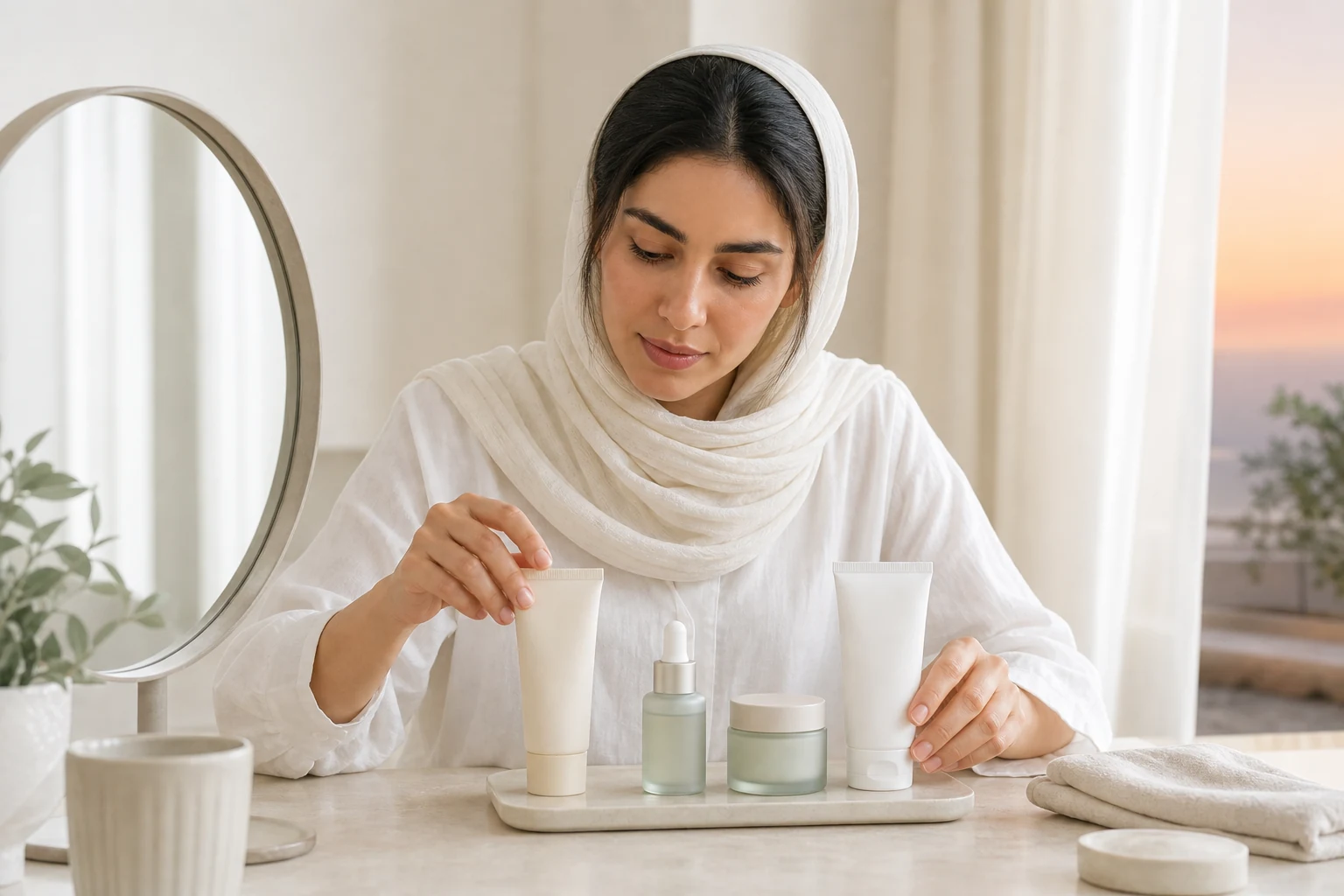
A Korean routine is not a fixed number of steps; its logic is about gentle cleansing, hydration, compatible layers and daily protection. To buy a Korean skincare routine, you don't need to order ten products at once. A good routine should match your skin type, goal, time and budget, and be something you can keep up without strain.
If you only have a minute
- Build the base of your routine with a gentle cleanser, a moisturiser and sunscreen; treatments come later.
- Focus on protection in the morning, and on appropriate cleansing and maintaining hydration at night.
- Toner, essence, masks and several serums at once are not essential for everyone.
- Introduce new products one at a time and give each a clear role.
- Compatibility with your skin and consistent use matter more than the number of steps or whether a product is Korean.
1. A routine is a system, not a fixed bundle
Buying a ready-made bundle may seem simple, but not every item in it is necessarily needed by one person. Think of your routine as a system: each product should have a clear role, should not clash needlessly with the others and should be doable in the time you have. If you can't explain what problem a step solves, postpone buying it for now.
To start, write down the products you already have. You may already own a suitable cleanser or moisturiser and only need a sunscreen or one targeted treatment. There is no scientific need for every part of the routine to be Korean; compatible formulas and your skin's tolerance matter more.
2. Separate skin type from goal
Skin type usually refers to the pattern of oiliness and dryness, but conditions such as sensitivity, dehydration or acne can appear in any skin type. Oily skin can also be dehydrated and reactive; dry skin can also break out. So a label such as "oily skin" or "dry skin" alone is not enough to build a routine.
Choose one main goal for the next eight to twelve weeks: reducing a feeling of tightness, better sun protection, simplifying your routine or following up a concern with a specialist's advice. Treatment goals such as severe acne, sudden dark spots or persistent inflammation are best reviewed with a dermatologist before buying several products.
- Dry: more comfortable textures, non-harsh cleansing and a focus on reducing moisture loss
- Combination and oily: light, non-heavy textures, without cutting out hydration completely
- Sensitive: a shorter list, a slow start and avoiding several new actives at once
- Acne-prone: non-comedogenic products where reliably labelled, and a coordinated treatment plan
3. Your morning routine basket: short and protective
For many people, the morning can be a gentle wash or just water, followed by a suitable moisturiser and sunscreen. Whether you need a cleanser in the morning depends on your oiliness, your evening products and your skin's tolerance. If your skin feels tight after washing, review the strength or frequency of your cleansing.
Sunscreen is the permanent pillar of the daytime routine. Choose a product you can apply in a sufficient amount and regularly. A beautiful but annoying texture usually ends up left on the shelf. Complement sun protection with shade, clothing and reapplication appropriate to your circumstances.
- A gentle cleanser if needed
- A moisturiser or hydrating product that suits your skin
- A broad-spectrum sunscreen with a suitable SPF and a pleasant enough feel
4. Your evening routine basket: cleansing and gentle recovery
At night the main aim is to remove make-up, sunscreen and the day's pollution without harsh washing. Double cleansing makes sense when long-wearing products or make-up need to be dissolved with an oil or micellar cleanser; it is not required for everyone or every night. The second step should clean the skin, not leave it feeling tight.
After cleansing comes a prescribed treatment or targeted product, then moisturiser. The exact order depends on the texture and directions of each product. Don't buy several acids, retinoids or strong serums just to complete the picture of a routine; every active should have a reason, a frequency and a clear point at which to stop.
5. Toner, essence, ampoules and masks: when are they worth buying?
These steps can add an experience or a specific goal to your routine, but they are not the core pillars. A hydrating toner may be pleasant for light layering; an essence or serum can deliver a targeted ingredient; a mask can also be a temporary, enjoyable experience. None of them replaces suitable cleansing, moisturiser and daily protection.
Before adding any step, ask: does another product already do the same job? Do I have the time and budget to use it consistently? Does the ingredient list create risky or irritating overlap with my current actives? If the answer isn't clear, a small sample or postponing the purchase makes more sense.
6. Spend your budget in order of impact
Being expensive or going viral is no guarantee of effectiveness. Put your budget first into products used every day and over a large area of skin: a compatible cleanser, moisturiser and sunscreen. Then add just one targeted product and assess how you use and tolerate it before the next purchase.
Compare volume, amount per use, period after opening and price per millilitre. A cheap serum that goes unused because of its texture or irritation is not an economical purchase. If you are torn between two products, the simpler, more sustainable formula is often the better starting point.
- Priority one: daily basics you can keep up
- Priority two: one targeted product with a clear role
- Priority three: experience-led or supplementary steps once the routine is established
7. How to start and evaluate products
Don't change your whole routine in one night. Check one new product, try it on a small area of skin and then bring it into your routine at a low frequency. For rinse-off products, contact time should follow the directions. If severe redness, itching, swelling or burning occurs, stop using the product.
Photograph your skin in similar light and conditions and look at the trend over several weeks rather than day-to-day results. Immediate changes in softness or glow may come from the product's texture; evaluating treatment goals needs time and clear criteria. If things get persistently worse or you have severe symptoms, simplify your routine and seek help from a specialist.
Frequently asked questions
How many steps does a Korean skincare routine have?
There is no fixed number. For many people, the three basics of gentle cleansing, moisturiser and sunscreen are enough. Treatments or supplementary steps are added according to the skin's needs and tolerance.
What products should I buy to start a Korean routine?
First review the products you already have. Fill in whichever basic you are missing: a compatible cleanser, moisturiser and sunscreen. Once these three are established, add just one targeted product.
Are toner and essence essential?
No. They may be useful for hydration or a layering experience, but they are not generally necessary and do not replace moisturiser or sunscreen.
Should oily skin skip moisturiser?
Usually not. Oil and water in the skin are two separate things. A light, compatible texture can maintain hydration without feeling heavy.
How soon should I introduce a new product into my routine?
One at a time, after testing on a small area of skin. Leaving time between changes helps you better identify the likely cause if a reaction occurs.
Sources and scientific basis
Reputable educational and regulatory sources were used for the skincare claims. The information on each product must ultimately be checked against the label on that pack.