
Buying Authentic Korean Products: A Complete Guide to Choosing and Verifying Authenticity
Before buying Korean products, how should you check the seller, packaging, batch, ingredients and delivery conditions? A practical path from choosing a product to opening the parcel.
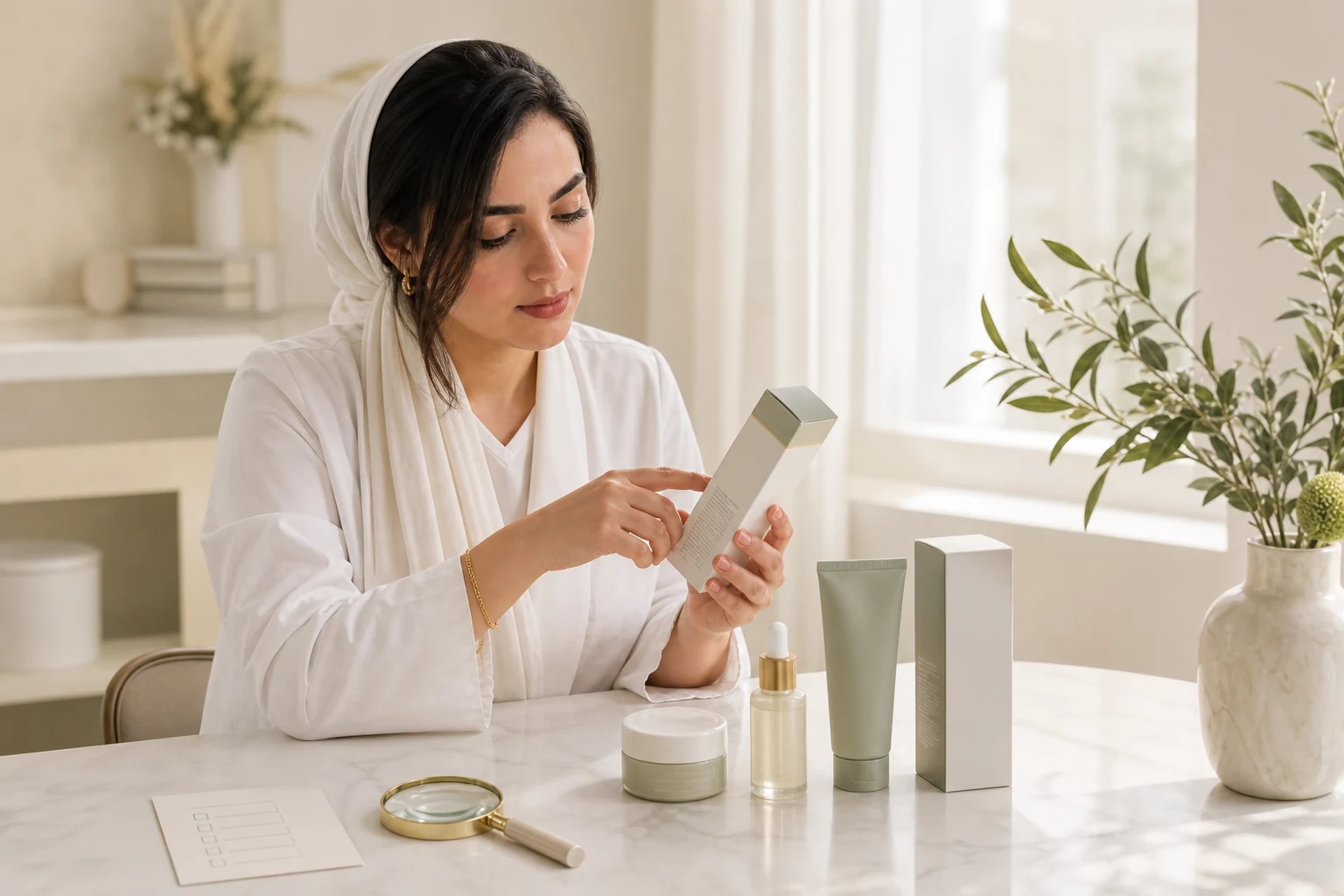
Buying Korean products is a good choice when the product's exact name, its fit with your needs and its authenticity trail are clear. Phrases such as "original", "imported" or "guaranteed" are not evidence on their own; a confident decision is built by putting several independent signs together. This guide walks through the buying process, from defining your need to checking the parcel after delivery.
If you only have a minute
- Before searching for a shop, pin down the product's exact name, form, volume and intended use.
- Authenticity is not proven by a single sign; the seller, batch, dates, packaging and supply route must all be consistent.
- An unusually low price is a signal to look more closely, not definitive proof of a counterfeit.
- Introduce new products into your routine one at a time, after checking the label and testing on a small area of skin.
- Injectable and professional products do not belong in a home shopping cart and have a separate inquiry route.
1. Define the exact product before you buy
Many wrong purchases start not with counterfeiting but with choosing the wrong SKU. A brand may have several creams, serums or supplements with very similar names, different volumes and different target markets. Save a picture of the product and write down its full English name, form, volume or count, version and intended use side by side.
Also state your skin's need in plain words: gentle cleansing, maintaining hydration, daily protection or a supplementary goal. If you have several concerns at once, prioritise one. Buying a set of active products without knowing the role of each both raises the cost and makes it harder to tell what caused good tolerance or irritation.
- The full brand and product name, without dropping suffixes such as Cream, Serum, Advanced or Sun Stick
- The volume or unit count and the type of packaging you expect
- Form of use: topical, oral or professional only
- Your skin's main need and the products already in your routine
2. Judge authenticity by a chain of evidence, not a hologram
Clean packaging, a barcode, a hologram or even a scannable code can be part of the check, but none of them makes authenticity certain on its own. A stronger criterion is whether all the information is consistent: the seller has a clear identity and contact details, the product's name and specifications match the official source, the batch number and dates have not been tampered with, and you get an understandable answer about how the product has been stored.
Pack designs can change over time or between target markets, so do not immediately treat a small visual difference as a counterfeit. Ask the seller for photos of the actual stock and compare them with the official version from around the same date. If there is a significant difference in volume, name, place of manufacture or product form, stop the purchase until the matter is cleared up.
- Match the batch number on the box with the one on the inner container.
- The printed manufacturing/expiry dates should not be erased, re-stuck or unclear.
- Check the seal, cap, box edges and container quality for signs of tampering.
- For authenticity codes or Hidden Tags, use only the route specified by the manufacturer.
3. What information does a reliable shop never hide?
A trustworthy shop has more than a beautiful product page. It offers an active contact channel, a clear returns policy, honest information about stock, full product specifications and a clear answer about damage or discrepancies. For products that are sensitive to light or temperature, how they are stored and shipped is also part of the quality of the purchase.
Absolute phrases such as "sole importer", "exclusive agent" or "100% side-effect free" should have verifiable backing. The absence of a document does not necessarily prove counterfeiting, but it is a good reason not to base your payment on the claim. A professional answer usually explains the limitations too, rather than just offering general reassurance.
- Name and contact details, an invoice and a way to track the order
- Real photos of the stock or a clear answer about the packaging version
- A returns policy covering a damaged seal, leakage or a product that does not match the order
- A clear separation between home-use products and clinical and professional products
4. Look at price, discounts and shipping together
The price of imported products varies with the exchange rate, volume, product version, shipping cost and supply conditions. A very low price may be due to a genuine discount, a near expiry date, older packaging or a more serious problem. Instead of jumping to conclusions, ask the reason for the difference and check the date, volume and returns conditions.
The cheapest order is not necessarily the least costly purchase. If the product arrives unsuitable, damaged or with no way of following it up, the entire amount is lost. Compare the final cost against the quality of the information, the security of the packaging, delivery time and after-sales service.
5. Read the label to check the fit with your skin
A product's popularity on social media does not show that it suits your skin. Read the ingredient list, warnings, directions and the limitations on the label. If you have sensitive skin, fragrance or several active ingredients together may be a reason for extra caution; if you are under treatment, your physician's opinion and your treatment plan take priority.
For a new product, dermatologists' general advice is to try it first on a small area of skin. This home test does not replace a medical patch test, but it can give an early sign of incompatibility before wider use. If you have a severe or persistent reaction, stop using the product and seek professional help.
6. Keep the line between home-use and professional products
Injectable products, professional vials and items supplied for clinical settings are not part of a home routine. Seeing the name of a familiar ingredient or a beauty claim does not change the route of use. These products require verification of the buyer's qualifications, a check of storage conditions and a specialist's decision.
A website that takes responsible buying seriously should show this line in its buy button, descriptions and warnings. If a professional product is sold like a daily cream, with express shipping and no questions asked, that in itself is an important warning sign.
7. Checklist after your order is delivered
Before breaking the seal, photograph the outer parcel and the product. Match the name, volume, batch, date and visible condition against your order. If you see leakage, an unusual smell, a change in texture or a serious discrepancy, do not use the product and contact support within the stated period.
Once you are sure of the details, store the product as the label says and note the date you opened it. Do not introduce several new products into your routine at once; spacing out changes helps keep your experience of each product traceable.
- Record a video or photos while opening the parcel so any discrepancy can be followed up
- Check the seal, batch, date, volume and exact name
- Read the storage directions and the period-after-opening symbol
- Start gradually and note any new skin reaction
Frequently asked questions
How can you tell whether a Korean product is authentic?
No single sign is enough. Check the seller's identity, whether the name and volume match the official source, the batch number, dates, the integrity of the seal, consistency between the box and the inner container, and whether the order can be tracked, all together.
Does a barcode or Hidden Tag prove authenticity on its own?
No. These tools can be part of the check, but the result must be consistent with the product's specifications and sales route. Scan only through the app or website specified by the manufacturer.
Does a low price mean the product is fake?
Not necessarily. A discount, an older packaging version or a near expiry date could also be the reason. An unusual difference is just a signal to check the date, volume, source and returns policy more carefully.
Can I start several new Korean products at the same time?
It is better to introduce new products one at a time, so that if irritation or incompatibility occurs, its cause can be identified. For sensitive skin, testing on a small area of skin matters even more.
Can professional or injectable products be bought for personal use?
These items are not designed for home use. They must be sourced and used through the professional route, with verification of qualifications and assessment by a physician or authorised practitioner.
Sources and scientific basis
Reputable educational and regulatory sources were used for the skincare claims. The information on each product must ultimately be checked against the label on that pack.